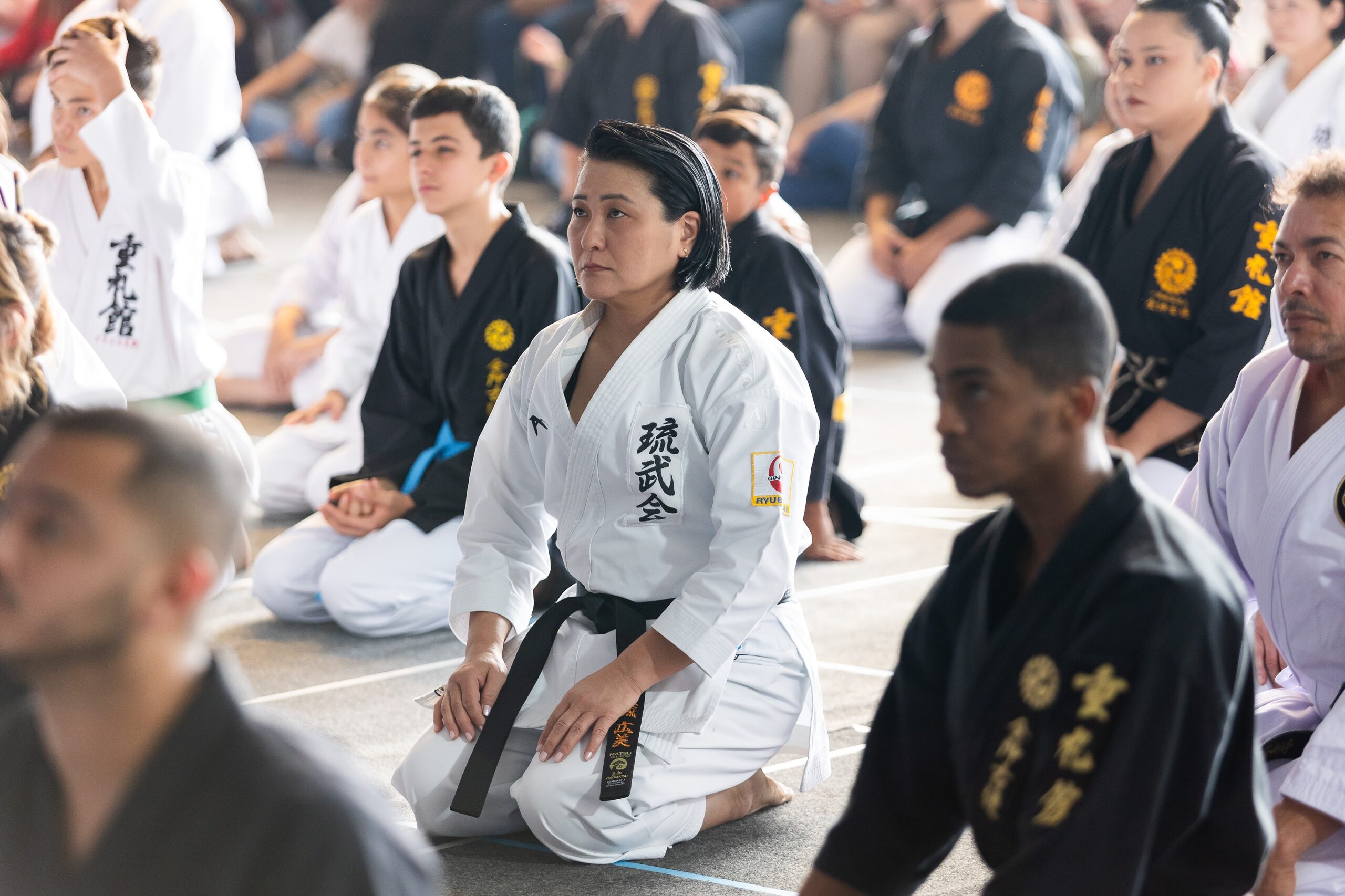


Seiza: Sitting with Respect, Practicing with Intention
The first time I sat in seiza, I realized there was something deeper there than just a posture. We kneel, sit back on our heels, keep the spine straight, and rest our hands on our thighs.
In Japan, seiza (正座) means “to sit correctly.” But this “correctly” does not refer only to the body. It refers to being present with respect.
In karate, seiza holds an important place.
As a karate practitioner, I learned that seiza marks both the beginning and the end of training. Before starting, we sit in silence to focus. At the end, we repeat the gesture as a sign of gratitude — to the sensei, to our training partners, and to the path we are walking.
It is not a detail.
It is part of the training.
What strikes me most is the respect contained within seiza, even when someone cannot perform it in the traditional way. In many dojos, especially out of consideration for older practitioners or those with physical limitations, the sensei allows students to sit cross-legged or even remain standing. What matters is maintaining a firm and respectful posture. The form may adapt. Respect does not.
Beyond the tatami, the culture continues.
Seiza also appears in various moments of traditional Japanese life, such as tea ceremonies, formal visits, and in temples. Even though many people in Japan today may not practice seiza frequently, it still carries symbolic value.
It is a simple gesture that communicates attention, humility, and presence.
Differences between men and women
Traditionally, men sit with their knees slightly apart, while women keep their knees together and their feet slightly angled to the side. These details are part of Japanese etiquette and are also respected within the dojo.
In karate, posture goes beyond physical form. It is part of discipline. Sitting correctly, according to tradition, demonstrates care, attention, and respect for what is being practiced.
Seiza is not about suffering
Sitting in seiza can be uncomfortable, especially for those who are not used to it. But over time, we understand that it is not about enduring pain. Seiza is not a test of resistance. It is a moment of presence.
Sitting this way, even for a short time, is a way of showing that you are truly there — with intention, humility, and respect.
Oss,
Alice Hiromi Tamashiro Matayoshi
Black Belt • Goju-Ryu Karate
No responses yet